Labor 5 min read
Build or buy is the wrong question
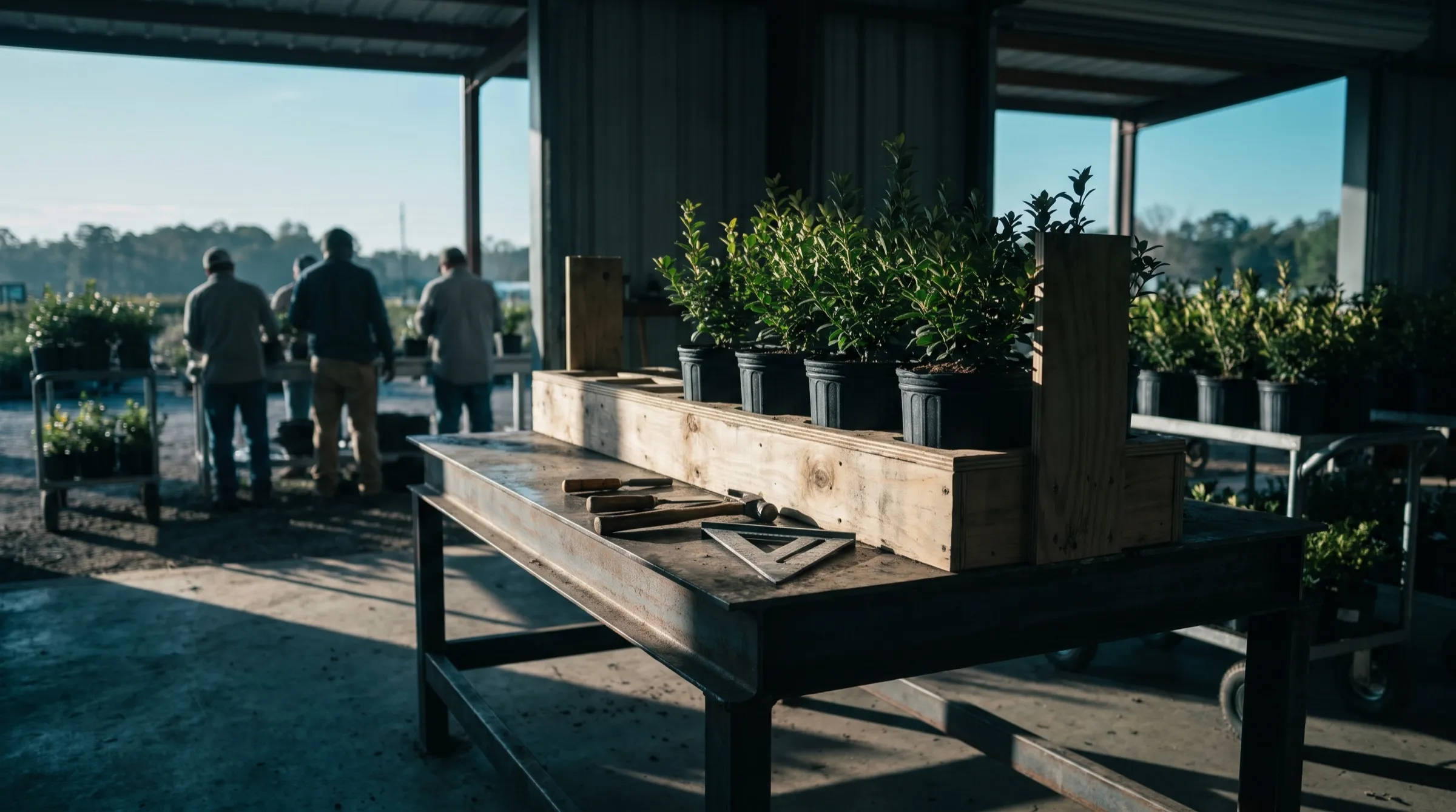
Your team can probably build it. The better question is which part only your operation can build, and which part you would rather not maintain forever.
Field notes
What we learn running connected irrigation in container nurseries: crop health, labor, inputs, and the numbers behind them.
Labor 5 min read
Your team can probably build it. The better question is which part only your operation can build, and which part you would rather not maintain forever.
Irrigation 5 min read
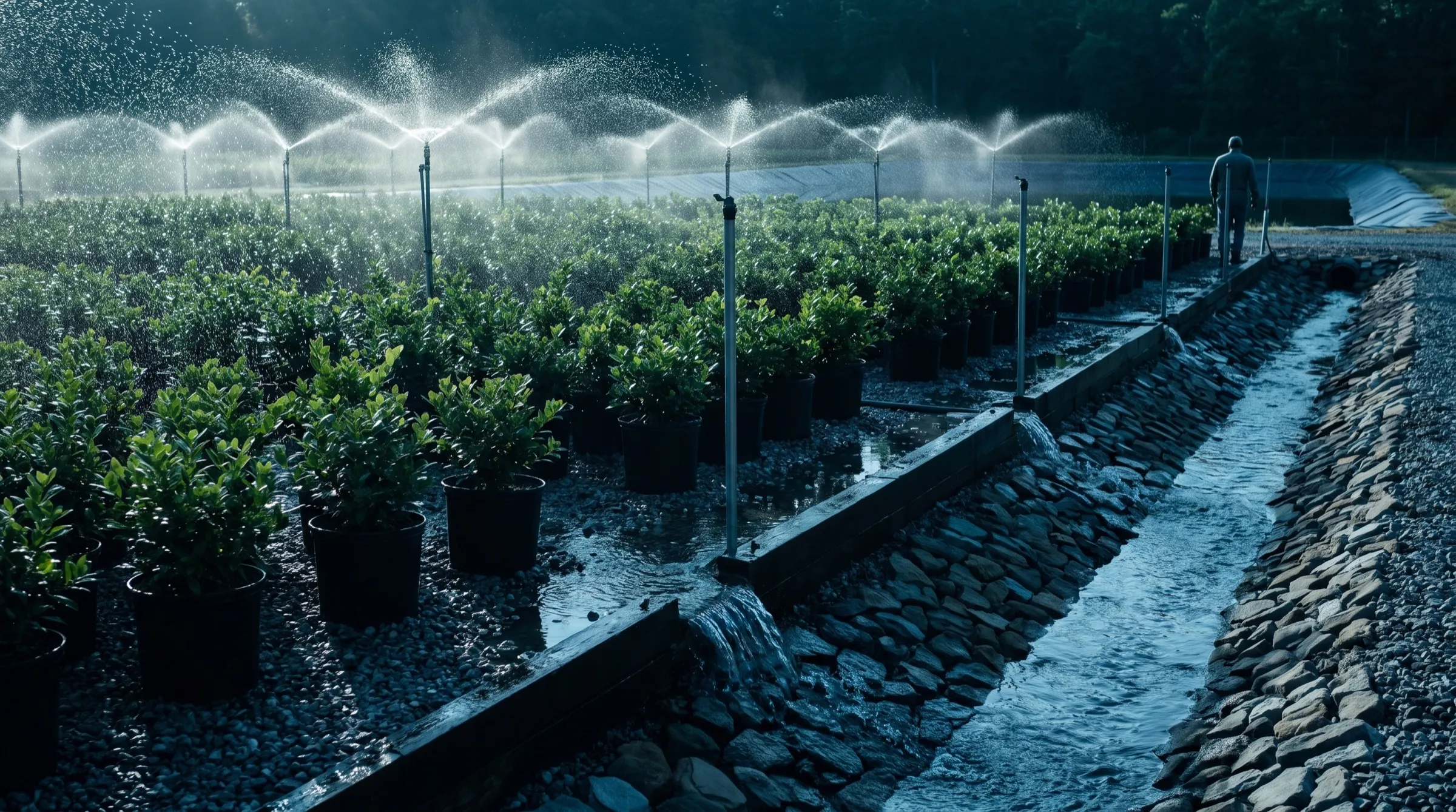
Fast-draining bark, recapture ponds, top-dress fertilizer, someone chasing valves. All rational fixes for one unmanaged root cause: overwatering in nurseries.
Irrigation 4 min read
A clock, a PLC, an IoT box or a person with a hose can open a valve. The hard part was never the valve. It is deciding how much, when and what else has to wait.
Crop health 3 min read
How irrigation shapes crop health in a container nursery, and why getting water right boosts growth, cuts costs, and reduces the inputs you buy to compensate.
Economics 3 min read
How automated irrigation and tighter resource management change the margin math for container nurseries: lower costs, healthier crops, less waste.
Inputs 2 min read
An optimized irrigation schedule keeps nutrients in the pot and foliage dry before nightfall, so you apply less fertilizer and fungicide without giving up crop health.
Labor 2 min read
Where the hours go in managing water across a yard, and which of them an automated, weather-based system removes.
Irrigation 3 min read
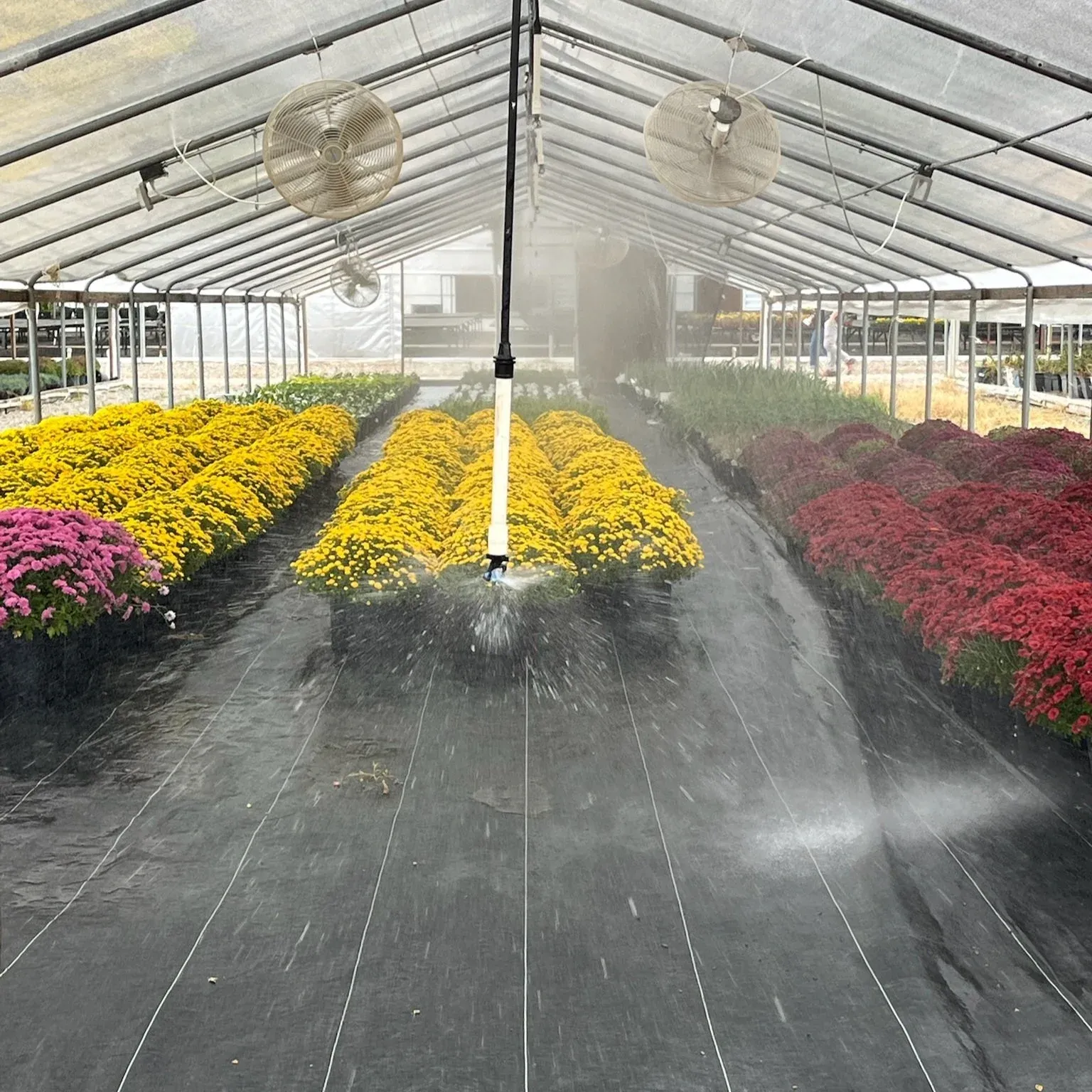
What happens when real-time weather data sets irrigation runtimes instead of a fixed schedule: less water, lower costs, and no loss in plant growth.
Crop health 2 min read
Leaching fraction is the simplest measure of whether you are overwatering. Here is how to run the test with a scale, a clipboard, and a sleeve pot.