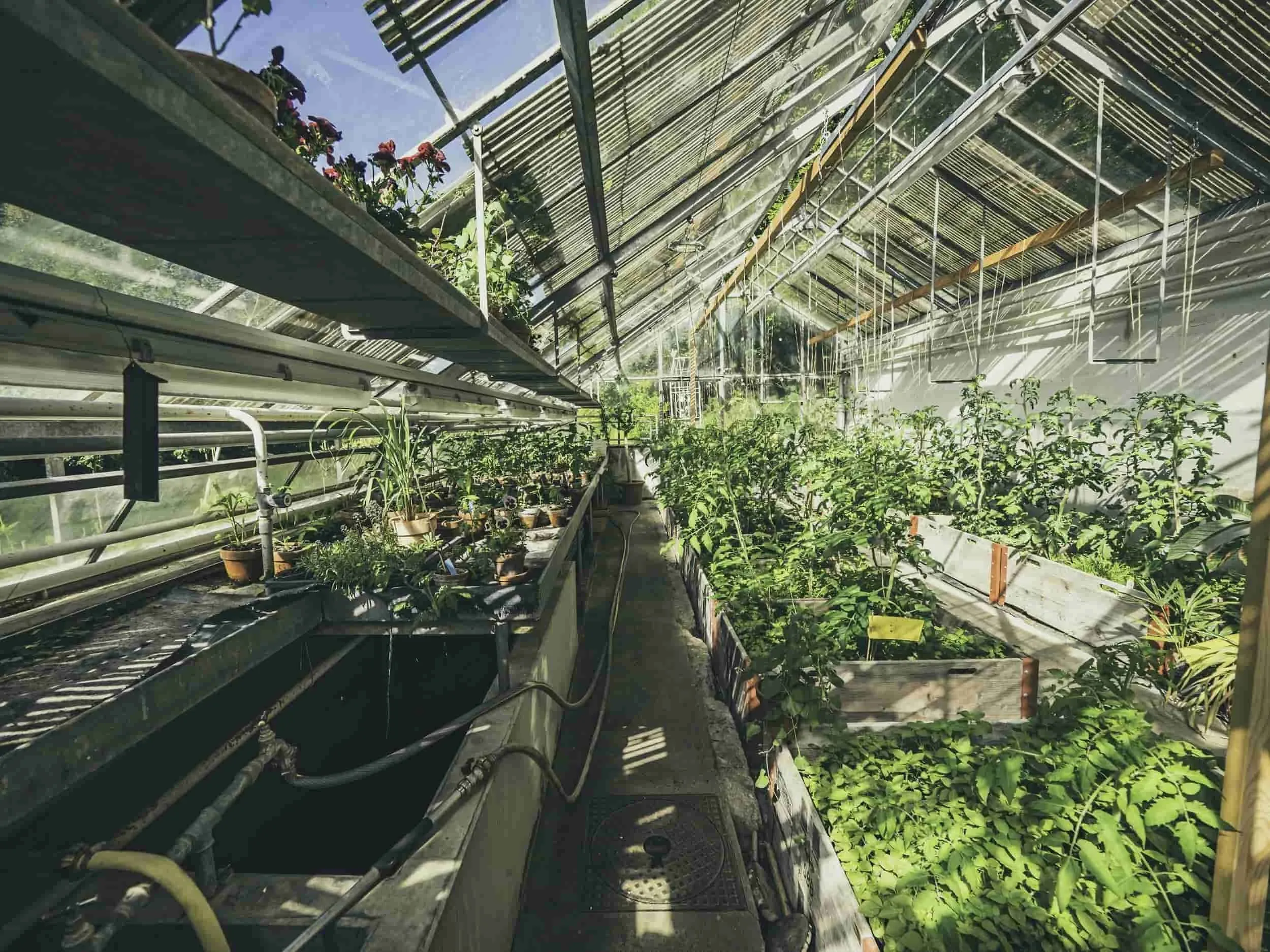
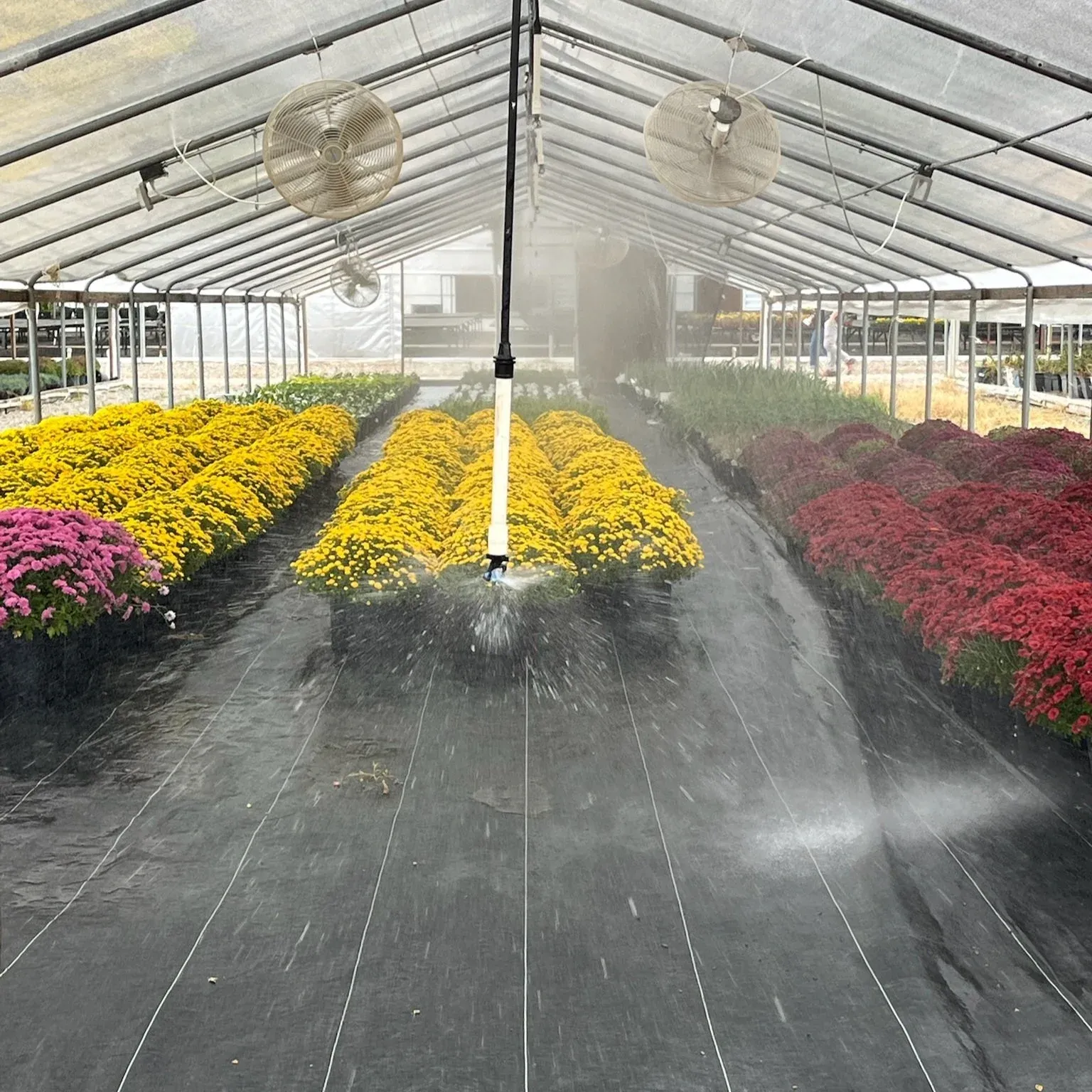
The industry engineered itself to tolerate overwatering
Fast-draining bark, recapture ponds, top-dress fertilizer, someone chasing valves. All rational fixes for one unmanaged root cause: overwatering in nurseries.
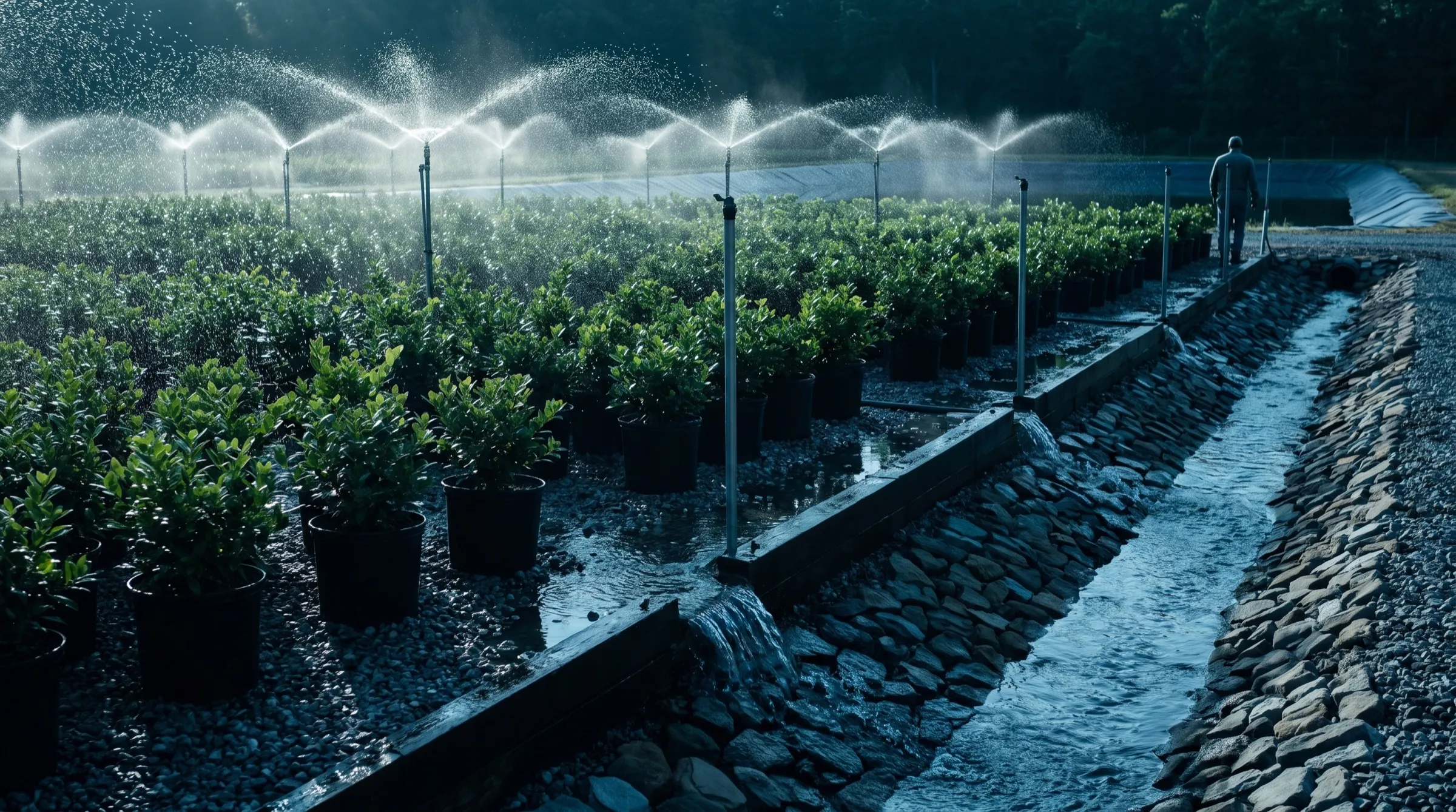
Ask anyone in a container nursery whether they overwater and you will get a version of the same answer: probably, on some blocks, but it is the safe direction to be wrong in.
They are right. It is the safe direction. And that is the whole problem.
The logic of staying wet
When a plant looks bad in a container yard, irrigation gets blamed first. Not nutrition, not pathology, not the pot it went into in April. Irrigation. It is the most visible input and the easiest one to point at.
So the incentives on the person running the water are asymmetric and obvious. Underwater a block and you get wilt, a visible loss, and a conversation. Overwater the same block and you get a slightly slower crop, a slightly higher fertilizer bill, and no conversation at all. One failure is legible and the other is invisible.
The pattern we hear repeatedly, about holding areas especially: stock nobody has time to walk gets more water than it needs, just to be safe. That is not carelessness. Given what those people are measured on and how much time they have, it is the correct decision.
Multiply one correct decision by hundreds of zones and a full season, and you have built an operation that runs wet by design.
Look at what the industry built around it
The interesting part is not that nurseries overwater. It is how much of standard nursery practice turns out to be a workaround for overwatering that we stopped recognizing as a workaround.
Fast-draining substrate. Pine bark mixes drain hard. That is a feature, and part of why it is a feature is that it forgives excess water. The medium is doing damage control for the schedule.
Recapture ponds and recycling infrastructure. Real capital, real permitting, real maintenance, built to catch water that left the container. Necessary, and also an admission about volume.
Top-dress and supplemental fertility. Nutrients leach out with the excess. So you put more back in. The literature is direct about the size of this: sensor- and ET-driven scheduling has been measured cutting nutrient emissions by 39 to 74 percent, with nitrogen leaching down around 70 percent (Incrocci et al., Agricultural Water Management, 2014). Every point of that reduction is fertilizer you bought and then washed into a pond.
Valve chasing as a job description. Someone walks the yard finding stuck valves, clogged emitters, and blocks that did not run. Genuinely necessary work. It is also a manual error-detection layer bolted onto a system that cannot report its own state.
None of these are mistakes. Each is a sensible local response. Together they form a cost structure built to absorb a root cause nobody manages directly.
What the research says the gap is
This is measurable, and other people have measured it.
Conventional timer-based practice in container nurseries tends to run leaching fractions in the range of 30 to 50 percent, meaning something like a third to a half of applied water leaves the container, far above what salt management actually requires. Disciplined scheduling lands closer to 19 to 25 percent (Incrocci et al., 2014). The recommended targets are lower still: roughly 10 to 15 percent for overhead sprinkler, 25 to 30 percent for micro-irrigation (Million & Yeager, 2019).
The savings that follow are not marginal. Incrocci and colleagues found sensor- and ET-based scheduling cut applied water by 21 to 40 percent with no loss in plant growth or quality. That clause is the one that matters, because the reflexive objection is that less water means a slower crop. Million and Yeager, working at a Florida container nursery on micro-irrigation, reported around 30 percent less water applied, saving on the order of 464,000 gallons per acre per year (HortTechnology, 2019). McCauley and Nackley grew equal-size plants on 26 percent less water (HardwareX, 2022).
Those are their results, not ours. Canopy is in beta at two nurseries and we do not yet have our own before-and-after numbers to show you. When we do, we will publish them with the method attached, the same way these authors did.
Why the fix isn’t “water less”
The obvious response (dial everything back ten percent) fails, and it fails for a reason worth understanding.
Overwatering is not uniform. It is the sum of hundreds of zone-level decisions made under uncertainty, and the uncertainty is not evenly distributed. A freshly potted liner block and a finished block heading out next week have genuinely different water demand on the same Tuesday. A cutting under shade and a three-gallon in full sun are different problems. Cut every zone by ten percent and you will overwater most of them slightly less while pushing a handful into real stress. Then you get wilt on those, irrigation gets blamed, and the yard goes back to running wet, permanently, and with a story attached about how automation does not work here.
The fix is not less water on average. It is the right water per zone, which requires knowing two things per zone that most operations cannot currently know continuously: what the atmosphere is actually pulling out today, and how much of what you applied is running out the bottom.
The first is evapotranspiration, and it is available from weather data. The second is leaching fraction, and it is measurable: the practice exists and is well established. The obstacle is not knowledge. It is that both need to reach the valve, per zone, without a person walking there to carry the message.
The reframe
We think the useful way to hold this is:
Overwatering is not an irrigation problem that nurseries have failed to solve. It is a measurement and control problem that the industry has been routing around for decades, at real expense, with bark and ponds and fertilizer and labor.
Those workarounds are load-bearing. Nobody should rip them out. But it is worth naming what they are, because the moment you can see the cost pool clearly (water, pumping energy, leached nutrients, the labor that inspects for the failures, and the crop you quietly lost and attributed to something else), the arithmetic on managing the root cause directly starts to look very different from how it looked when it was just “we water a little heavy, everybody does.”
Do you know your leaching fraction on any block right now? If you have measured it, I would like to hear what you found. Reply and tell me.
Sources
- Incrocci, L. et al. (2014). Agricultural Water Management 131:30–40.
- Million, J. & Yeager, T. (2019). HortTechnology, Hibernia Nursery, FL.
- McCauley & Nackley (2022). HardwareX 11:e00298.