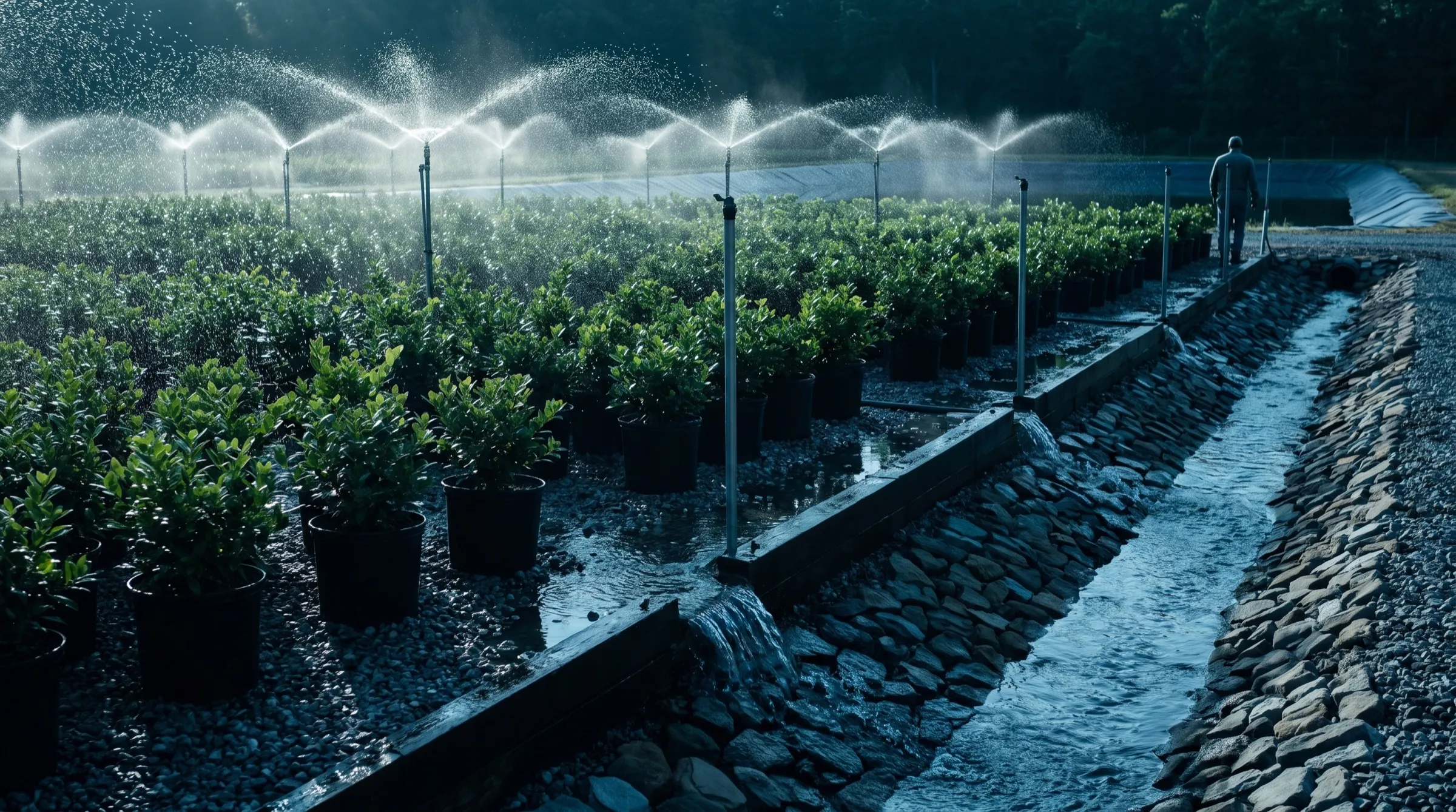
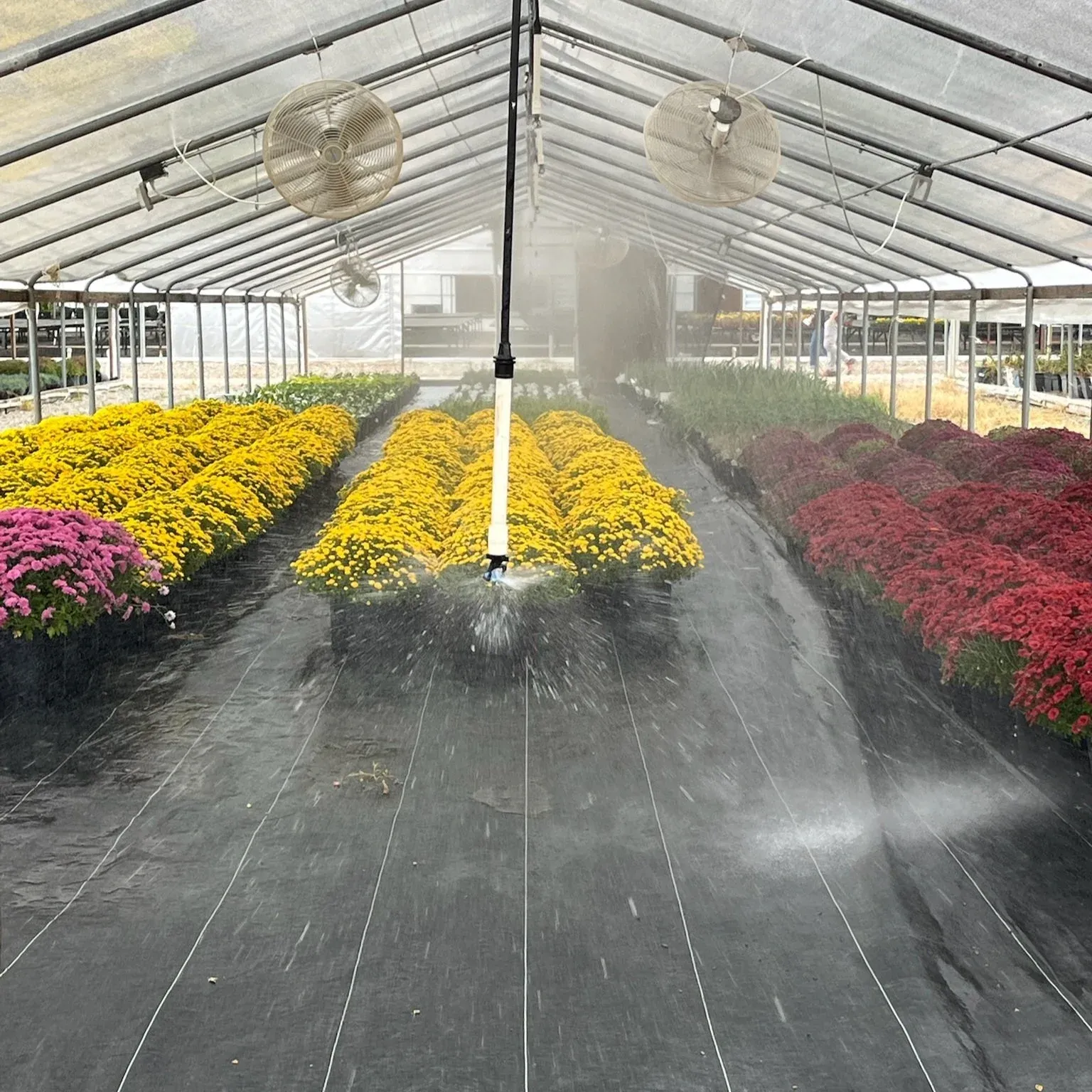
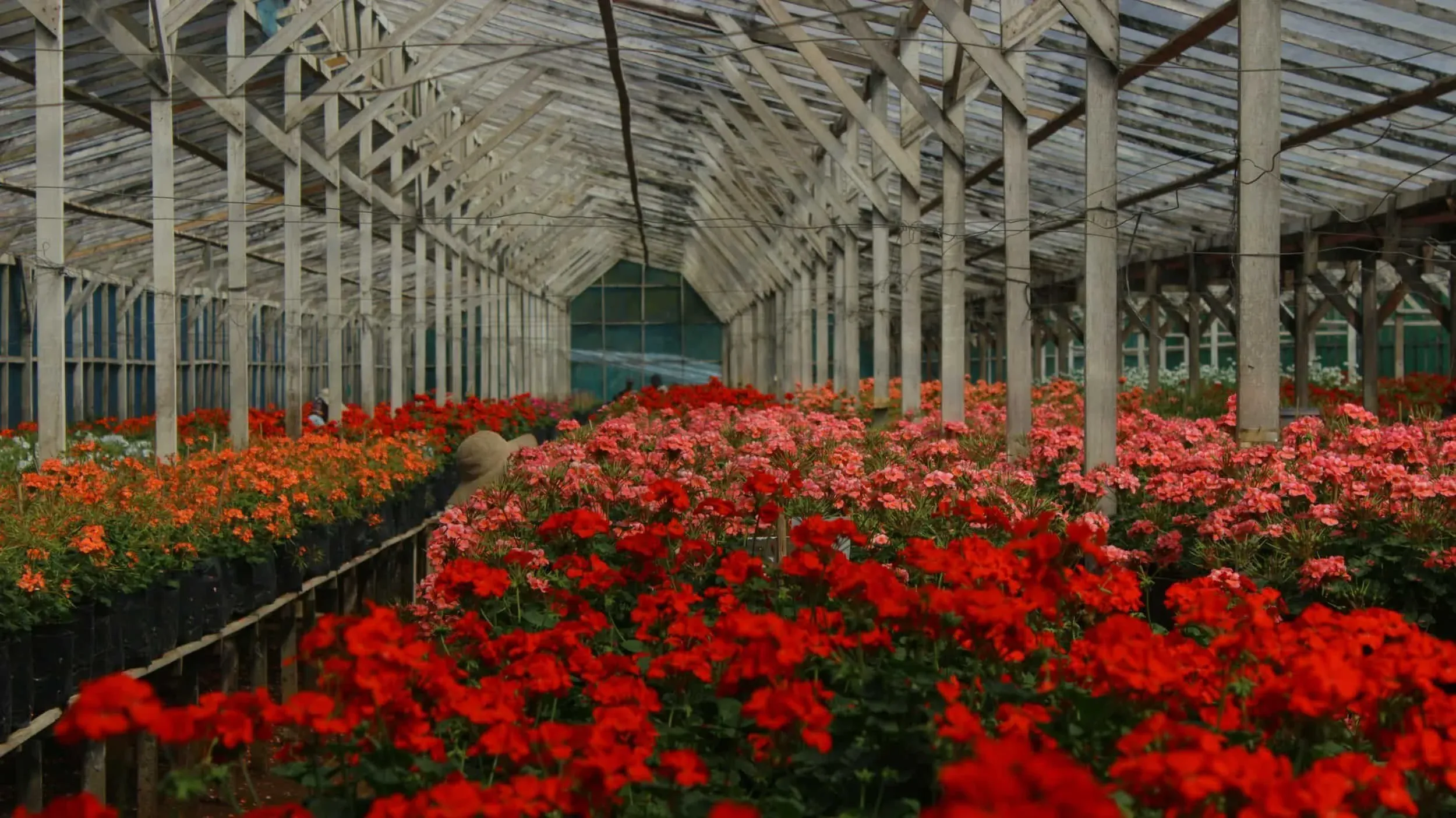
Irrigation is just another task
A clock, a PLC, an IoT box or a person with a hose can open a valve. The hard part was never the valve. It is deciding how much, when and what else has to wait.
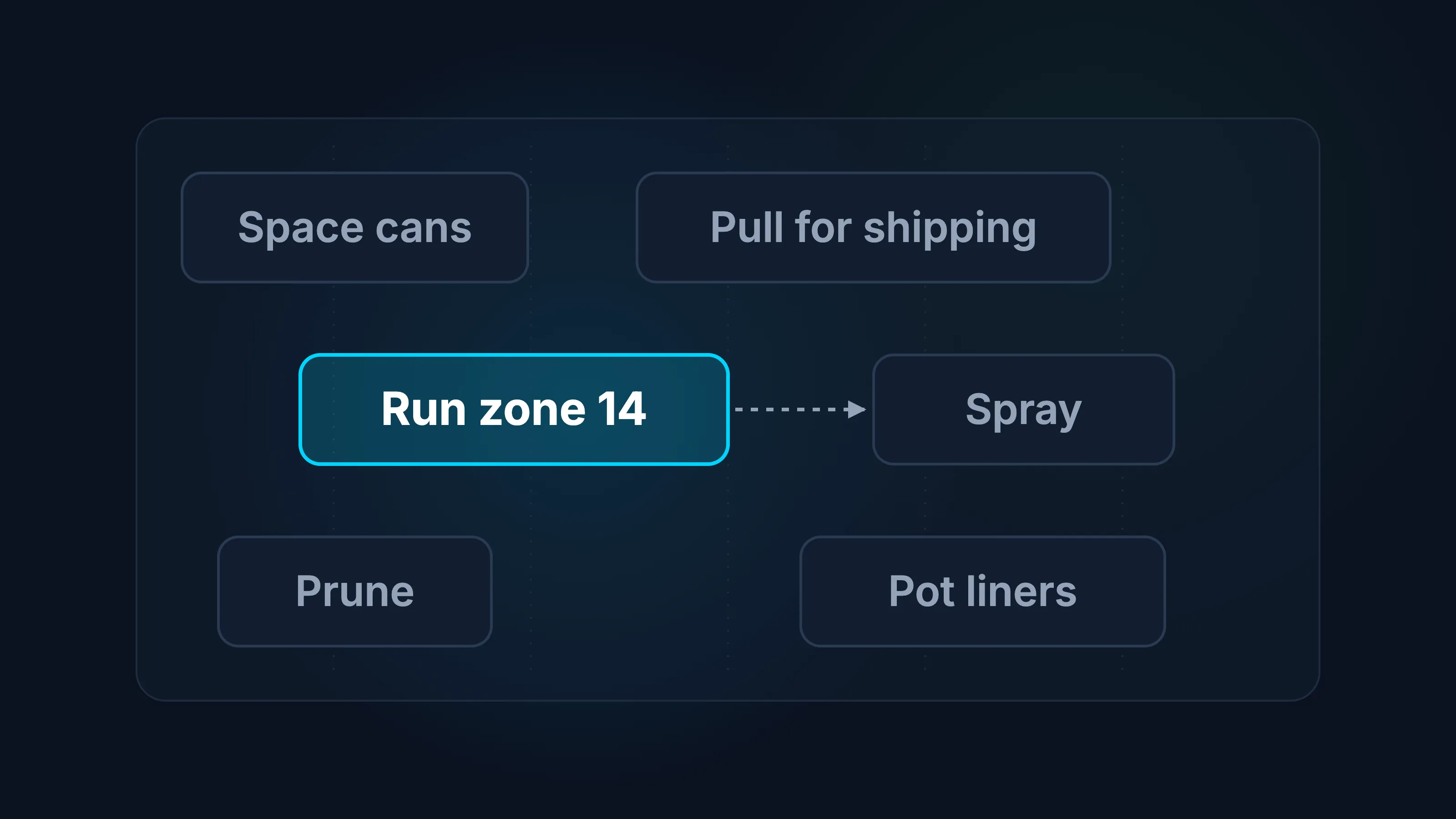
Irrigation is the one job in a growing operation that cannot be skipped. Miss a day of pruning and you are behind. Miss a day of water in July and you are writing off a block. It is the lifeblood of the yard, and everyone who has run one knows it.
And yet irrigation is just another task.
That sounds like a demotion. It is the opposite. It is the most important thing we have learned about where the real work in irrigation lives.
What actually goes into a run
Ask an irrigation manager why zone 14 ran for eleven minutes this morning and you will not get a one-line answer. You will get context.
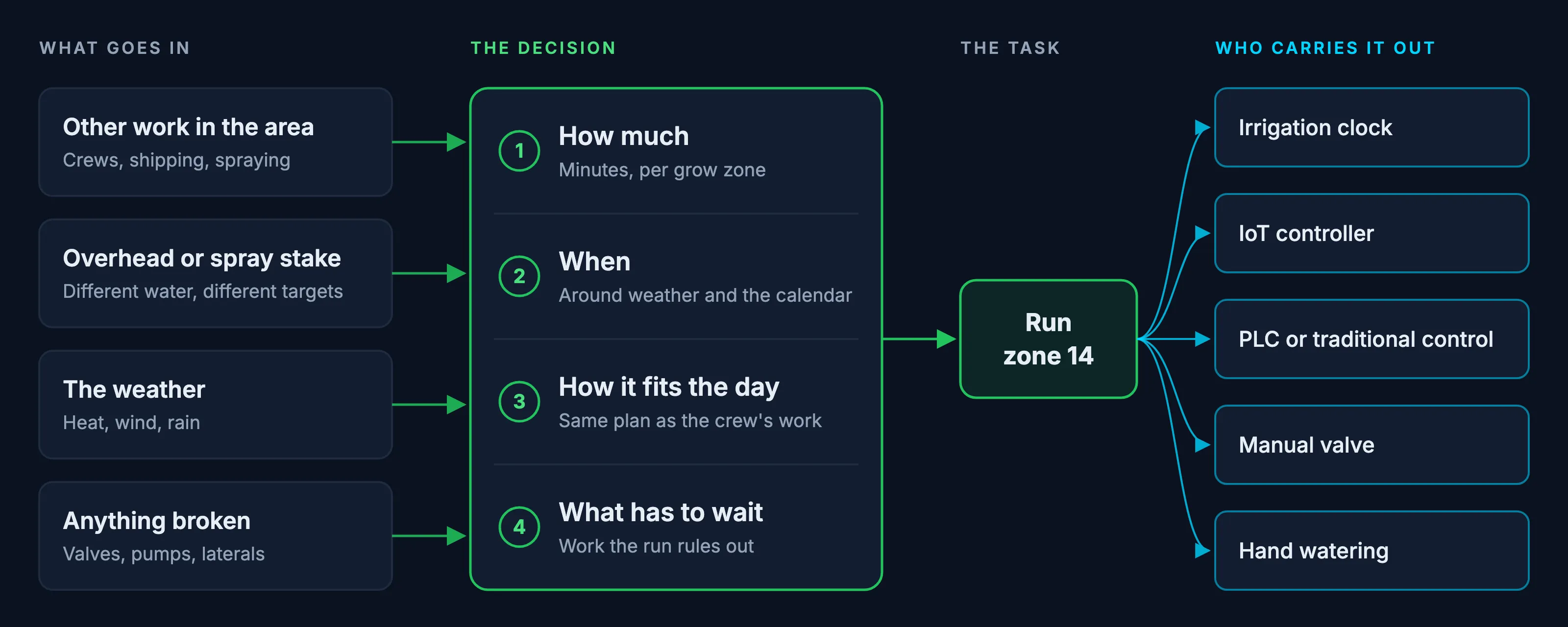
What else is happening in that area. A crew is spacing cans in the next block over. Shipping is pulling from the end of the row at ten. Someone is spraying this afternoon and wants the foliage dry.
How the zone is watered. Overhead and spray stake are different problems. Overhead wets everything in the block, aisles and foliage included, and a lot of it lands between pots. Spray stakes put water in the container. Million and Yeager (2019) put leaching fraction targets at roughly 10 to 15 percent for overhead sprinklers and 25 to 30 percent for micro-irrigation. Same crop, same day, different number.
The weather. Heat and wind raise demand. Wind also carries overhead water somewhere you did not intend. A forecast storm can make a run pointless.
Whether something is broken. A stuck valve, a pump that is losing pressure, a cracked lateral. When that happens the plan changes, and sometimes the plan becomes a person with a hose.
None of that lives in the controller. It lives in the head of whoever is deciding.
There are a lot of ways to open a valve
Walk enough yards and you will see every kind of actuator. Irrigation clocks. IoT controllers. Traditional controls and PLCs. Manual valves someone opens on a round. A crew member hand watering the edge of a block that always runs dry.
They differ in reliability, cost, and how much they can tell you about what they did. Those differences matter. But look at what each one is doing: carrying out a task that someone, or some system, decided should happen.
To us, irrigation is a decision
At Canopy we treat every run as a decision with four parts.
- How much. A number, per grow zone. In Canopy that number comes from live evapotranspiration and a target leaching fraction set for each zone, so a spray-stake zone and an overhead zone get different answers on the same day.
- When. A time, chosen around the weather and around everything else on the calendar.
- How it fits the day. Irrigation sits in the same plan as potting, pruning, spacing, spraying, and shipping, because it competes with them for the same blocks.
- What has to wait. While a zone runs, some work in it cannot happen. Nobody should be sent to space cans in a block that is about to run.
That last part is the one most yards still handle by memory and shouting. Somebody walks into a wet block. A zone gets skipped because people were in it. The two schedules that constrain each other most are kept in two different heads.
Why calling it a task matters
Once a run is a task, it can be planned like one. It has a place, a time, a duration, and a list of things it rules out. It can sit on the same plan as the crew’s work, and the plan can see the conflict before anyone gets wet.
That is what we are building toward: a planner that treats an irrigation run as a first-class part of the day, so the crew plan routes around the water instead of colliding with it.
It also means the actuator stops being the identity of the system. If the decision is right, it does not matter much whether a controller, a PLC, or a person with a hose carries it out. What matters is that it was decided with the whole yard in view, and that someone can look back and see what ran, where, and why.
How does your operation decide when a block runs, and who finds out when it changes? Reply and tell me. I want to hear how it actually works in your yard.